Introduction
Rapid urbanization has reduced access to traditional farmland, making food production in cities a challenge. Rooftop farming offers an innovative and sustainable solution by transforming unused rooftops into productive green spaces. This method allows urban residents to grow fresh vegetables, reduce food expenses, and contribute to environmental sustainability. This guide explains everything you need to know about rooftop farming, from setup to harvesting.
What Is Rooftop Farming?
Rooftop farming is the practice of growing plants on building rooftops using containers, raised beds, or hydroponic systems. People widely use it in cities where land availability is limited, but sunlight is sufficient.
Benefits of Rooftop Farming
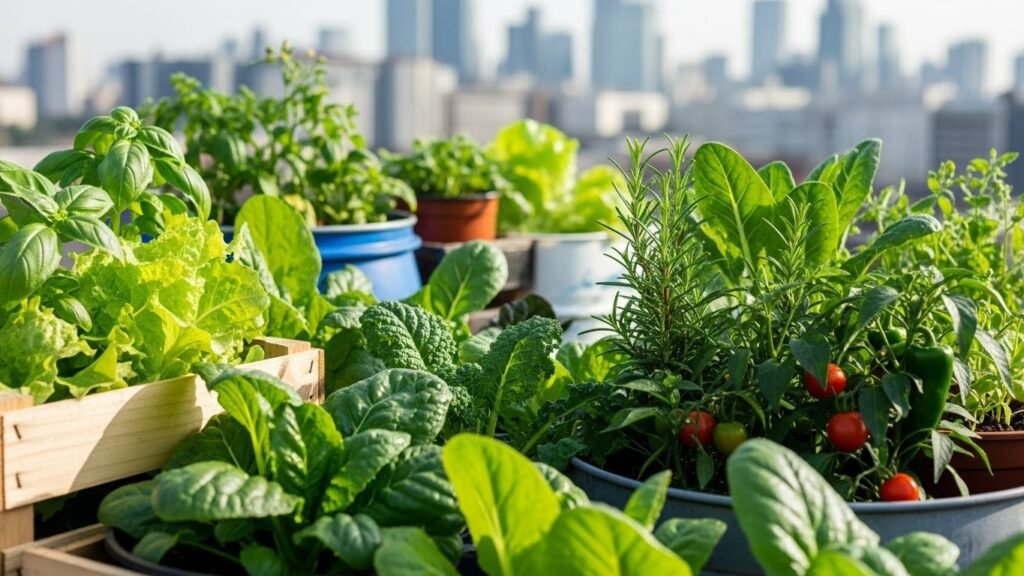
Rooftop farming provides fresh, chemical-free food and improves air quality. It also reduces urban heat, manages rainwater runoff, and promotes mental well-being. Many urban farmers report improved food security and healthier diets.
Is Rooftop Farming Suitable for Your Building?
Before starting rooftop farming, it is crucial to check the roof strength, water drainage, and sunlight availability. Flat roofs with good sun exposure are ideal for most crops.
Choosing Crops for Rooftop Farming
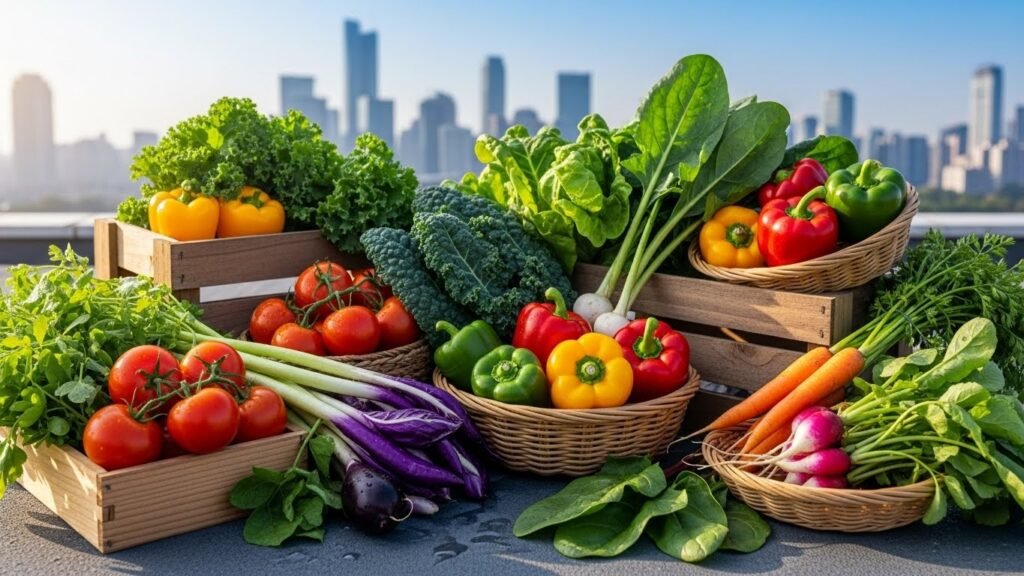
Lightweight and fast-growing vegetables are best suited for rooftop farming. These crops require minimal soil depth and adapt well to containers.
Popular rooftop crops include:
- Leafy greens
- Tomatoes
- Chili peppers
- Herbs
- Spinach
Containers and Growing Media
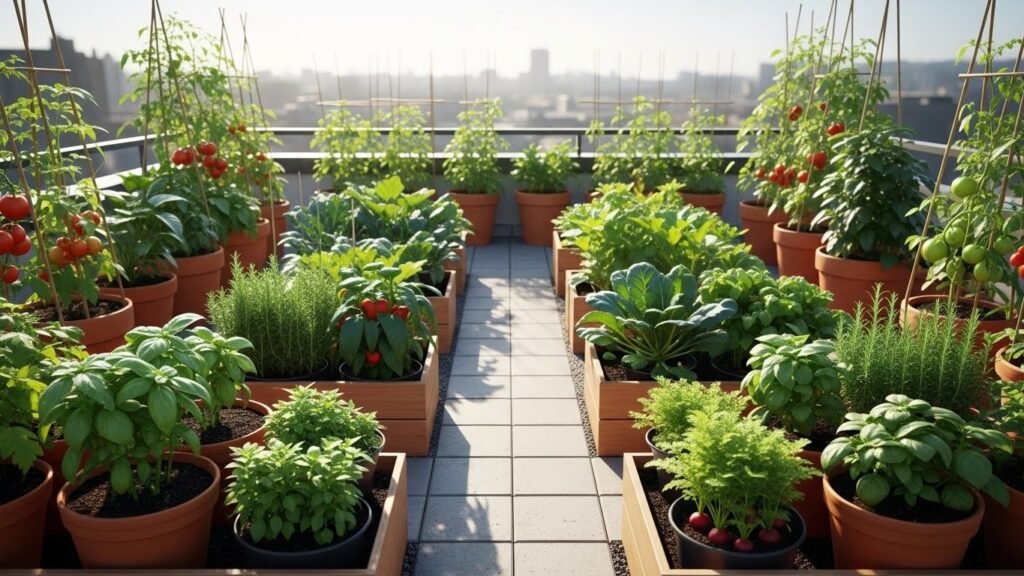
Containers should be lightweight and durable. Growing media must provide good drainage and nutrient retention. A mix of compost, coco peat, and garden soil works well for rooftop farming.
Water Management on Rooftops
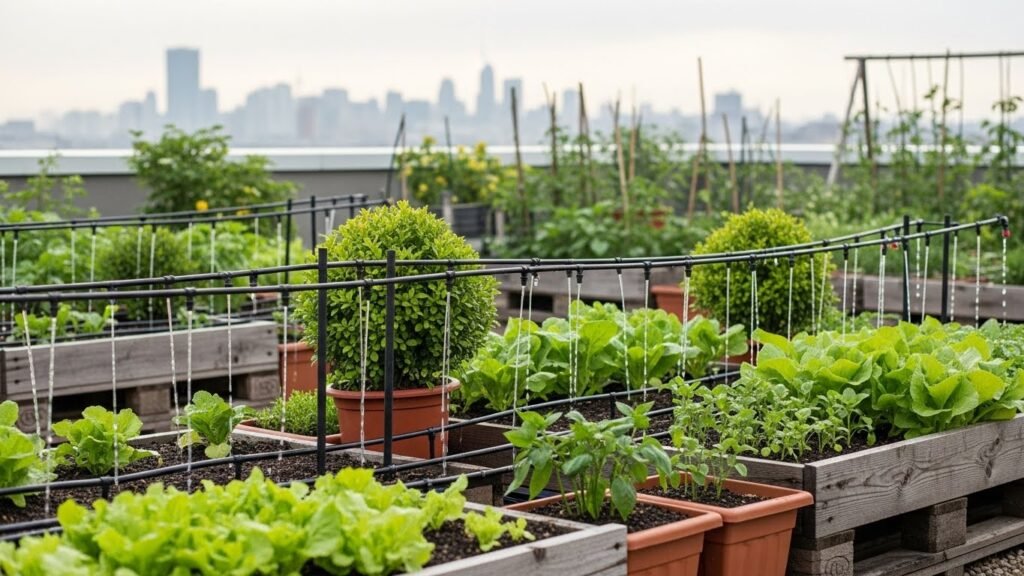
Efficient watering is essential because rooftop gardens dry out faster than ground-level gardens. Drip irrigation or early-morning manual watering reduces water loss.
Organic Fertilization
Using organic fertilizers keeps rooftop produce safe and healthy. Compost, vermicompost, and liquid organic fertilizers provide essential nutrients without chemical residue.
Pest and Disease Control
Rooftop gardens generally face fewer pests, but regular monitoring is still essential. Natural pest control methods such as neem spray and manual removal are effective and safe.
Harvesting and Maintenance
Regular harvesting encourages continuous growth. Removing dry leaves, pruning plants, and maintaining cleanliness keep the rooftop garden productive.
Cost and Profit Potential
Rooftop farming requires low initial investment and can significantly reduce household food expenses. Farmers can also sell surplus produce locally or share it within their communities.
Environmental Impact of Rooftop Farming
Rooftop farming reduces the carbon footprint by reducing the need for food transportation. It also helps regulate building temperature and improves urban biodiversity.
Common Mistakes to Avoid
Overloading the roof, poor drainage, and irregular watering are common mistakes. Planning and regular maintenance ensure long-term success.
Future of Rooftop Farming
As cities grow, rooftop farming will play a crucial role in urban food systems. Technological innovations and community initiatives are expanding their potential worldwide.
Conclusion
Rooftop farming is an effective way to grow food in urban environments, even with limited space. With proper planning, crop selection, and maintenance, anyone can create a productive rooftop garden and contribute to a more sustainable future.