Top 5 Agricultural Drones for Crop Monitoring and Spraying in 2026
A decade ago, seeing a drone buzzing over a cornfield was a novelty. Today, it is as common as a tractor. As we move through 2026, agricultural drones (UAVs) have graduated from “cool gadgets” to essential farm machinery.
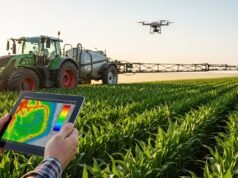
For the modern farmer, a drone is not a toy; it is a flying data analyst. It can spot a pest infestation before you see it from the road, map 100 acres in minutes, and even spray fungicides with surgical precision.
However, the market is flooded with options. From cheap consumer quadcopters to $30,000 autonomous spraying platforms, the choice can be overwhelming. Which one is right for your farm?
This guide cuts through the noise. We have analyzed the market to bring you the top 5 agricultural drones of the year, categorized by their best use case—whether you need to spray, map, or scout.
Why Invest in an Agricultural Drone?
Before we look at the models, it is crucial to understand the Return on Investment (ROI). Why are farmers spending thousands of dollars on this technology?
- Efficiency: A drone can scout a 50-acre field in 20 minutes. Walking that same field would take half a day.
- Precision: Spraying drones can target specific weeds rather than blanketing an entire field, reducing chemical costs by 30-50%.
- Health Safety: Drones keep humans away from direct exposure to harmful pesticides.
- Data-Driven Decisions: Multispectral cameras see things the human eye cannot, such as early-stage nitrogen deficiency.
1. The Heavy Lifter: DJI Agras T50
Best For: Commercial Spraying and Spreading
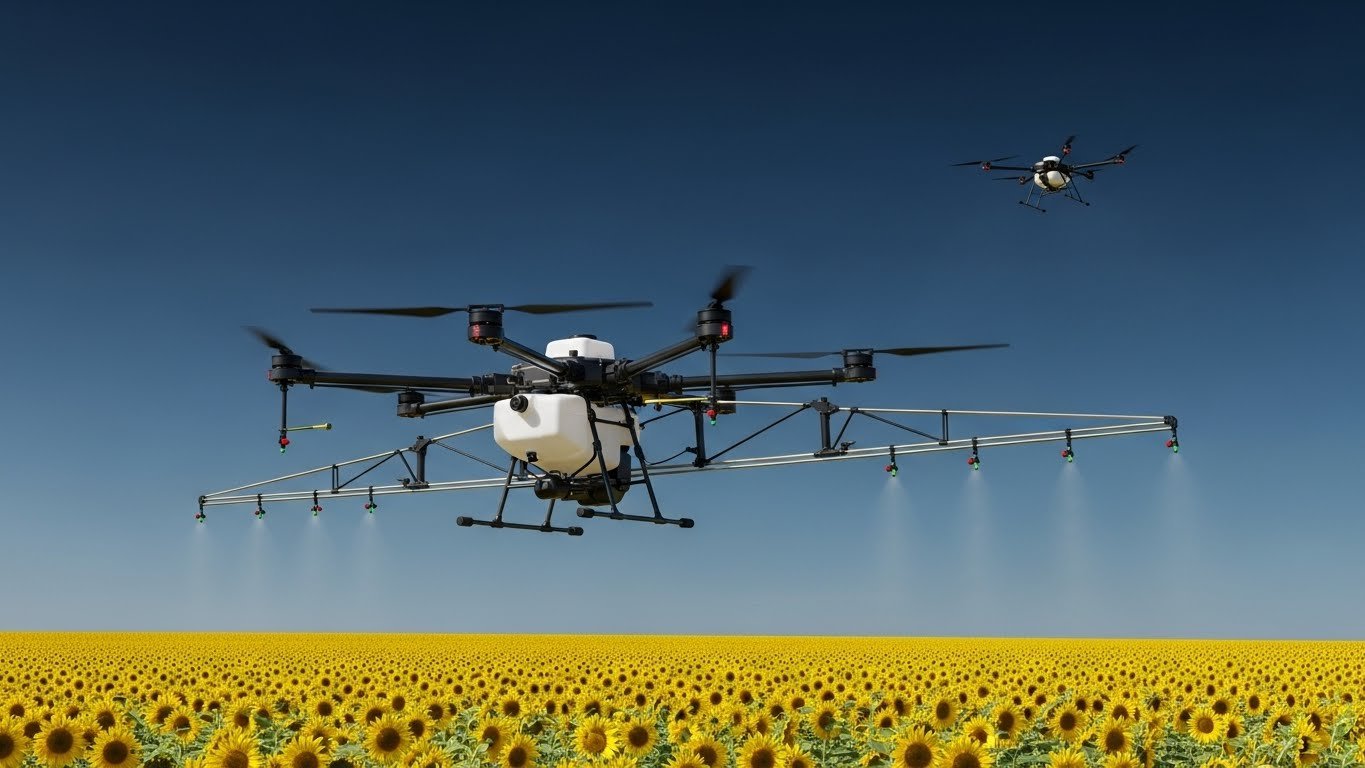
If you are looking for a drone to replace your ground sprayer for rugged terrain, the DJI Agras T50 is the undisputed king of the sky in 2026. DJI has dominated the consumer market, but its “Agras” line is built purely for industrial work.
Key Features
- Payload: It boasts a massive 40-liter spray tank or a 50kg spreader tank for seeds and fertilizers.
- Speed: It can cover up to 50 acres per hour.
- Radar: It features an Active Phased Array Radar, allowing it to detect obstacles in 360 degrees and automatically follow the contours of steep hillsides.
Why It Wins
The T50 solves the biggest problem of drone spraying: battery life and capacity. Its coaxial twin-rotor design provides incredible lift. It supports “swarming,” meaning one pilot can control multiple T50s simultaneously. For orchards, vineyards, or rice paddies where tractors cannot go, the T50 is a game-changer.
- Pros: Huge capacity, intelligent obstacle avoidance, fast charging (9 minutes).
- Cons: Expensive entry price; requires a generator for field charging.
2. The Agile Scout: DJI Mavic 3 Multispectral (M3M)
Best For: Crop Scouting and NDVI Mapping
Not every farm needs a heavy sprayer. Most farmers need to know what is happening in their fields. The DJI Mavic 3 Multispectral is the perfect tool for this. It looks like a standard camera drone, but it hides a superpower under the hood.
Key Features
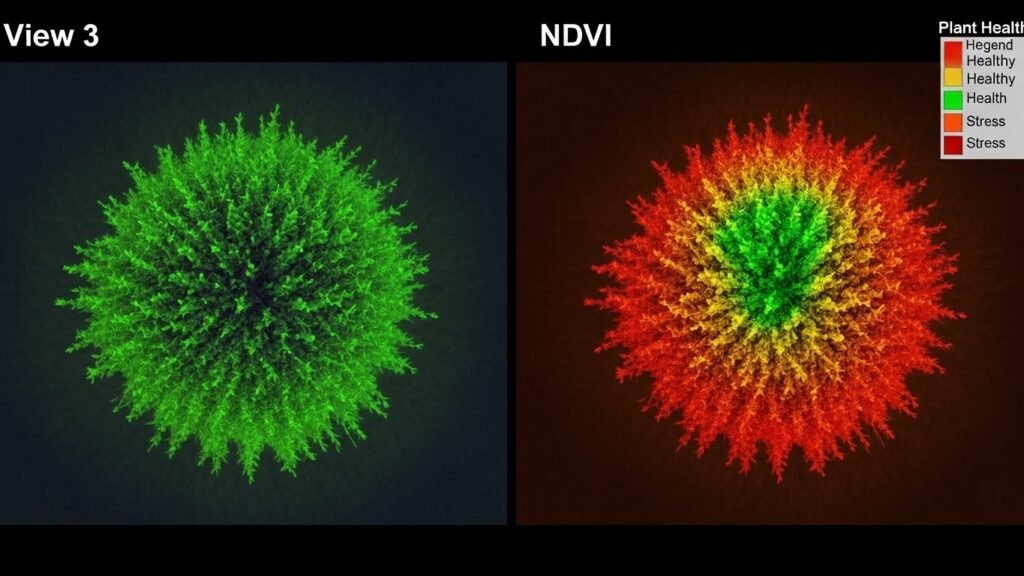
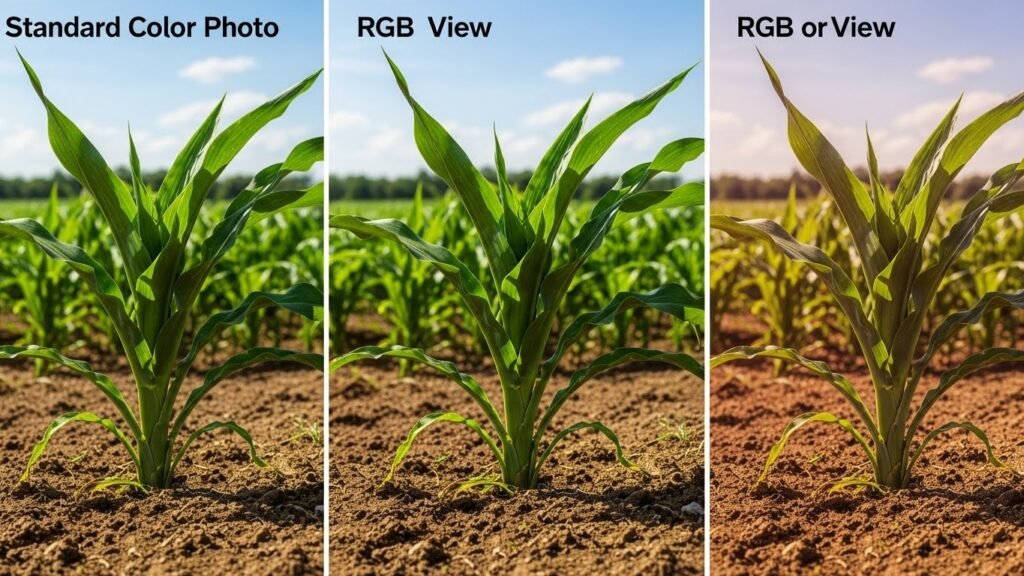
- Sensors: It carries a built-in multispectral camera system (Green, Red, Red Edge, and Near-Infrared) alongside a standard 20MP RGB camera.
- RTK Module: It includes an RTK (Real-Time Kinematic) module on top, ensuring every photo is geotagged with centimeter-level accuracy.
- Portability: It folds up and fits in a small backpack.
Why It Wins
The M3M brings professional multispectral imaging to the masses. In the past, you needed to buy a $10,000 camera and strap it to a $5,000 drone. The Mavic 3 integrates it all. You can fly over a crop, process the images, and generate an NDVI map that shows exactly which plants are stressed—all before lunch.
- Pros: Portable, easy to fly, industry-standard multispectral data, affordable.
- Cons: Not designed for flying in heavy rain or high winds.
3. The Autonomous Workhorse: XAG P100 Pro
Best For: Fully Autonomous Farm Operations
While DJI dominates the market, XAG is its fiercest competitor, offering innovations that often surpass the giant’s. The XAG P100 Pro is designed for farmers who want automation first.
Key Features
- Modular Design: The drone platform is separate from the payload capability. You can detach the flying unit from the tank in seconds, making transport easier.
- Spreading Efficiency: Its “RevoCast” system is designed specifically for spreading granular fertilizer and seeds with high uniformity.
- XAG One App: Their software is arguably the most user-friendly for setting up fully autonomous missions without needing piloting skills.
Why It Wins
The XAG P100 Pro is built for durability. It is IPX7 waterproof, meaning you can hose it down after spraying chemicals. Its drop-size control is rotary-based, allowing you to adjust droplet size on your phone screen (e.g., fine mist for insecticides, coarse drops for herbicides).
- Pros: excellent spreading mechanics, waterproof, modular design.
- Cons: Dealer network is smaller than DJI’s in some regions.
4. The Mapper: senseFly eBee Ag
Best For: Large Scale Mapping (1000+ Acres)
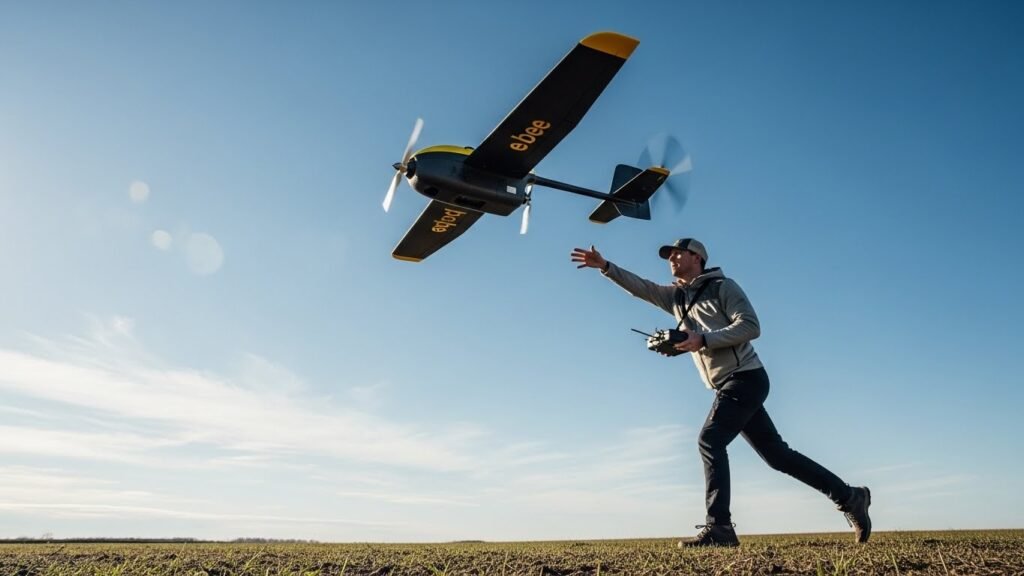
Quadcopters (drones with propellers) are great, but they use a lot of battery to stay in the air. If you need to map a massive 2,000-acre corn operation, a quadcopter will need 10 battery swaps. The senseFly eBee Ag is a “fixed-wing” drone that flies like an airplane.
Key Features
- Flight Time: It can fly for up to 55 minutes on a single battery.
- Coverage: It can map up to 395 acres in a single flight.
- Durability: Made of shock-absorbent foam, it is lightweight and rugged.
Why It Wins
The eBee series is legendary in the surveying world. It is purely a data-gathering tool. You throw it into the air to launch it, it flies the mission automatically, and then glides down to land. For large cooperatives or agronomists who sell mapping services, this is the most efficient tool available.
- Pros: Massive coverage area, long flight time, highly accurate data.
- Cons: Cannot hover (cannot inspect a single plant closely), requires landing space.
5. The VTOL Specialist: WingtraOne Gen II
Best For: Professional Surveying and Topography
What if you want the speed of an airplane but the takeoff ability of a helicopter? Enter the WingtraOne Gen II. This is a VTOL (Vertical Take-Off and Landing) drone. It takes off straight up like a rocket, tilts forward to fly like a plane, and lands vertically on its tail.
Key Features
- Vertical Landing: It does not need a runway or a soft grassy landing zone like the eBee. It can land on a dirt road or a boat.
- Camera Quality: It carries high-end Sony cameras (42MP), providing better resolution than almost any other drone on this list.
- Accuracy: It offers “Absolute Accuracy” down to 1 cm without needing ground control points (GCPs).
Why It Wins
This is a high-end tool for serious professionals. If your farm requires precise topographical maps for drainage planning or terrace building, the WingtraOne provides engineering-grade data. It is expensive, but for land management companies, it pays for itself.
- Pros: Best-in-class accuracy, VTOL convenience, and coverage of large areas.
- Cons: High price point, heavy.
Buying Guide: What to Look For
Before you pull out your credit card, consider these three factors.
1. Flight Time vs. Coverage
Do not just look at “minutes.” Look at coverage per hour. A sprayer might only fly 10 minutes but can empty its tank in that time. A mapper needs endurance. Match the battery life to your average field size.
2. Software Compatibility
The drone is just the hardware. You need software to stitch the photos together into a map. Ensure your drone is compatible with major platforms like Pix4D, DroneDeploy, or FieldAgent. DJI and XAG have their own ecosystems—make sure you are comfortable with them.
3. Service and Repair
You will crash. It is a matter of when, not if. Does the brand have a repair center in your country? DJI has a vast network; smaller brands might require you to ship the drone overseas for repairs, which can cost you weeks of downtime during harvest.
A Note on Regulations
In 2026, drone laws are stricter than ever. In the US, the FAA (Federal Aviation Administration) requires a Part 107 license for commercial flying. If you are spraying (carrying a payload), you need a Part 137 exemption.
In Europe, EASA regulations categorize drones by weight. Always check your local laws. Flying a heavy agricultural drone near an airport or over a highway can result in massive fines and confiscation of your equipment.
Conclusion
The era of smart farming is here, and agricultural drones are leading the charge. Whether you choose the DJI Agras T50 for heavy-duty spraying, the Mavic 3M for daily scouting, or the eBee Ag for massive mapping missions, these tools offer a competitive edge that manual labor cannot match.
Investing in an agricultural drone is not just about buying a gadget; it is about buying time, data, and efficiency. Evaluate your farm’s specific needs—acreage, terrain, and crop type—and choose the bird that fits your budget and your goals.