

Automated Tractors and Robotics: Is the Investment Worth It for Small Farms?
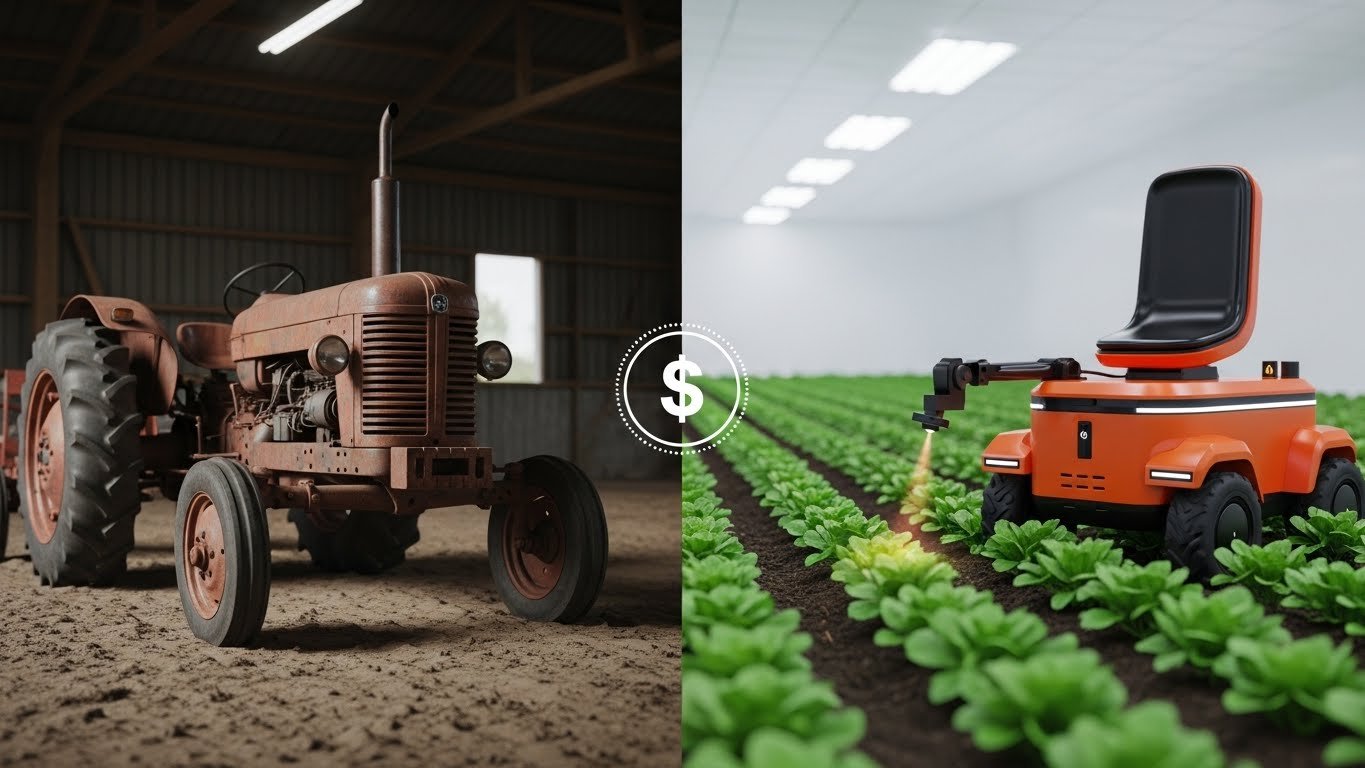
For decades, the image of farming has been a human sitting in the tractor cab, steering the wheel from sunrise to sunset. It is a job defined by long hours, physical fatigue, and the constant challenge of finding skilled labor.
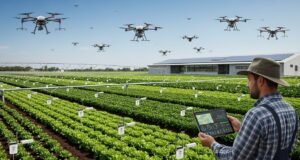
But that image is fading. We are entering the age of agricultural robotics. From massive combines that steer themselves to small, solar-powered bots that pick weeds one by one, automation is reshaping the landscape.
For large commercial operations with thousands of acres, the math is simple: automation pays off. But what about the small to mid-sized farmer? If you are running a 50-acre vegetable farm or a family orchard, is investing in an autonomous tractor a smart business move, or just a flashy way to go bankrupt?
This guide analyzes the costs, the benefits, and the emerging business models that are making robotics accessible to the little guy.
The Rise of the Farm Droids
First, let’s clarify what we are talking about. Agricultural robotics is not just one thing; it is a spectrum of technology.
1. Autonomous Tractors
These are the heavy hitters. Companies like John Deere and Case IH have unveiled fully autonomous versions of their standard tractors. They look like normal tractors, but they are packed with cameras, LiDAR, and AI. They can plow a field without a driver in the seat, controlled entirely from a smartphone.
2. Retrofit Kits
This is a game-changer for small farms. Instead of buying a new $500,000 tractor, companies like Bear Flag Robotics (now part of John Deere) or Sabanto build kits that turn your existing tractor into a self-driving machine.
3. Field Robots (The Swarm Approach)
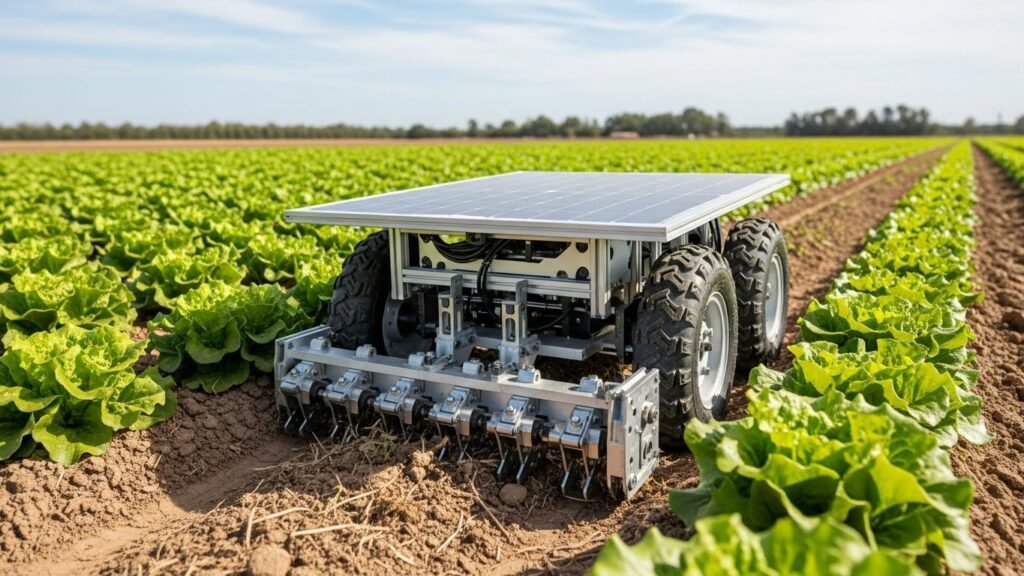
These are entirely new machines. They are small, lightweight, and often electric. Instead of one giant tractor compacting the soil, you might have five small robots (like the Naïo Oz or FarmDroid) working simultaneously. They weed, seed, and scout crops 24/7.
The Benefits: Why Automate?
Before discussing the price tag, we need to examine the value proposition. Why would a small farm want this?
The Labor Crisis
This is the number one driver. Finding reliable farm labor is becoming impossible in many parts of the world. Young people are moving to cities, and seasonal migrant labor is increasingly expensive and regulated. Robots do not call in sick, do not need visa paperwork, and do not get tired after 8 hours.
Precision and Chemical Reduction
A human on a tractor sprays the whole field. A robot with computer vision sees a weed and sprays only the weed (or pulls it out mechanically).
- Result: Some weeding robots reduce herbicide usage by 90%. For an organic farm where hand-weeding is the most significant expense, a mechanical weeding robot is a miracle worker.
Soil Health
Heavy machinery compacts the soil, killing the biology and making it harder for roots to grow. Small, lightweight field robots exert less pressure on the ground than a human foot. This preserves soil structure and improves long-term yields.
The Barrier: The Cost Reality
Now, the elephant in the room: Money.
A fully autonomous 8R tractor from a major manufacturer can cost upwards of $500,000 to $800,000. For a small family farm operating on thin margins, this is a non-starter. The ROI (Return on Investment) isn’t there if you don’t have the acreage to spread that cost over.
However, the “sticker price” is deceptive. The market is evolving to solve this problem precisely.

Making it Viable: Solutions for Small Farms
If you can’t afford a half-million-dollar machine, does that mean you are left behind? Not necessarily. Here are three ways small farms are accessing agricultural robotics right now.
1. Robot-as-a-Service (RaaS)
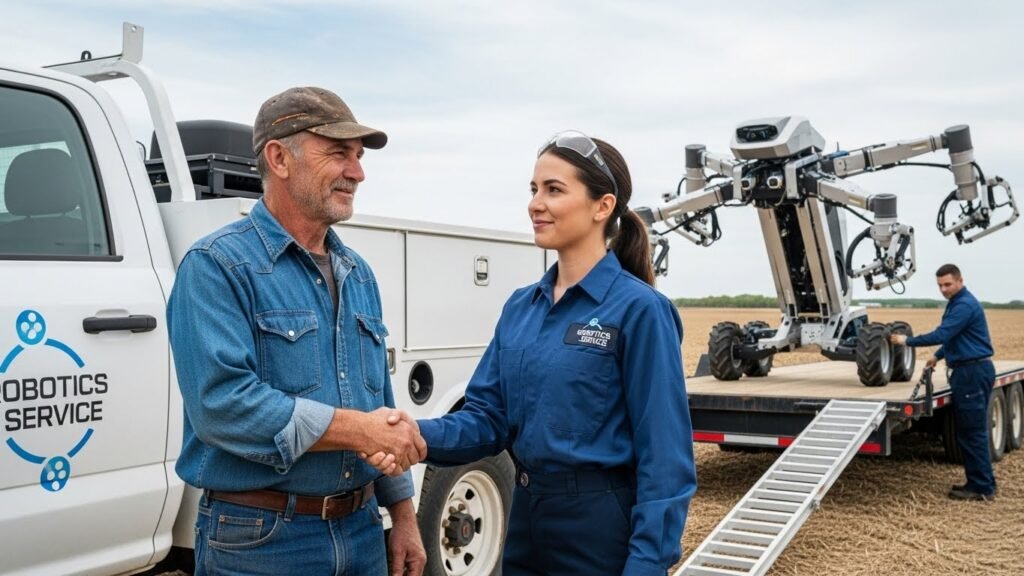
This is the “Uber” model of farming. Instead of buying the robot, you hire it.
- How it works: A service provider brings a fleet of wedding robots to your farm. They charge you a fee per acre (often comparable to or cheaper than manual labor). They handle maintenance, charging, and transport. You get weed-free fields.
- Why it works: Zero upfront risk for the farmer. If the robot breaks, it’s not your problem.
2. The Retrofit Option
As mentioned earlier, retrofitting is far cheaper than buying new.
- Cost: A retrofit kit might cost $30,000 to $60,000.
- Value: If that kit allows your existing tractor to run for 10 extra hours a day while you sleep, it effectively gives you a “free” employee. For a mid-sized operation, this can pay for itself in two seasons.
3. Small, Specialized Bots
Small robots like the FarmDroid FD20 (a solar-powered seeder and weeder) cost roughly $80,000.
- The Math: If an organic farmer spends $40,000 a year on manual weeding crews, the robot pays for itself in two years. After that, it is essentially free labor (minus maintenance). For high-value crops like sugar beets, onions, or organic veg, the math works surprisingly well even on 20–50 acres.
The Hidden Costs to Watch Out For
It is not all sunshine and solar panels. If you are considering this investment, you must be aware of the hidden challenges.
Maintenance and Repair
If your 1980s tractor breaks, you can fix it with a wrench. If a robot breaks, you need a laptop and a specialized technician. “Right to Repair” is a significant issue. Downtime during harvest can be catastrophic, and if the nearest technician is 300 miles away, you are in trouble.
Connectivity
Most robots rely on GPS (RTK) and cellular data. If your farm is in a dead zone, the robot might stop. You may need to invest in a base station or Wi-Fi infrastructure, which will add to the cost.
Learning Curve
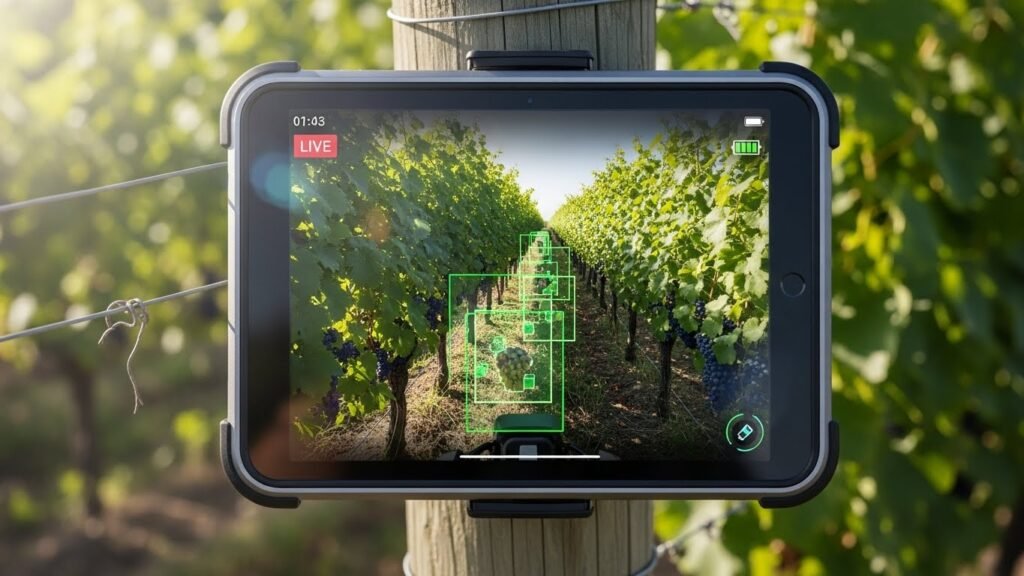
You are moving from being a tractor driver to a fleet manager. You need to be comfortable with iPads, software updates, and troubleshooting digital maps.
Real-World Success Stories
Case Study: The Organic Veggie Farm
A 40-acre organic farm in France invested in a Naïo Oz (a small weeding assistant).
- Before: The farmer spent 4 hours a day bent over, hoeing weeds. Back pain was constant.
- After: The robot handles the inter-row weeding. The farmer now spends that time marketing his produce and managing sales. The farm’s revenue increased because the farmer had time to find better buyers.
Case Study: The Vineyard
A vineyard in California faced a labor shortage during pruning season. They hired a RaaS company with automated pruning robots.
- Result: The job was completed on time at a fixed cost per vine, despite the heatwave that would have slowed human workers.
Conclusion: Is It Worth It?
So, is agricultural robotics worth the investment for a small farm?
The answer is: It depends on your crop.
- For Commodity Crops (Corn/Soy/Wheat): Probably not yet. On small acreage, the margins are too thin to justify the high upfront cost of autonomous machinery. The RaaS model is your best bet here.
- For High-Value Crops (Vegetables/Vineyards/Orchards): Yes. If you grow labor-intensive crops that require thousands of dollars in annual manual weeding, pruning, or harvesting, a robot can offer an ROI in as little as 2-3 years.
The revolution is here. It is not about replacing the farmer; it is about giving the farmer a tool to survive in an economy where labor is scarce. The future of the small farm might depend on a little metal helper.



 models.)